

 Ms. Lê Thị Ánh Trinh
In vitro is a biotechnology technique that involves culturing cells, tissue, or microorganisms in a controlled artificial environment outside the organism. In agriculture, this method plays a crucial role in rapid plant propagation, preserving valuable genetic resources, and improving overall crop yield and quality. At GC Food, in vitro technology serves as the foundation for developing high-quality aloe vera seedlings that meet strict production standards
1. What is in vitro culture technology?
In vitro (meaning "in a test tube" in Latin) is a method of biological research conducted on cells, microorganisms, or biological molecules under conditions isolated from their natural biological environment. Unlike in vivo (on whole-body) research, in vitro studies allow scientists to observe and analyze biological processes in detail without being affected by the complexities of the living organism.
Basically, in vitro (tissue culture) is a method of plant propagation in a sterile environment with fully controlled growth conditions. From small leaf or bud samples, GC Food can produce thousands of identical aloe vera plants, consistent in quality, size, and nutritional value.

2. Advantages and disadvantages of tissue culture technology
Tissue culture technology offers many advantages but also has some limitations that need to be considered during its application.
2.1. Advantages of In vitro?
Living organisms are incredibly complex systems with tens of thousands of genes, proteins, RNAs, and ions in their tightly organized environment. In vitro studies allow for the isolation of certain components for detailed research, such as the mechanism of antigen recognition by antibodies or the absorption of a substance through intestinal Caco-2 cells.
In vitro experiments can be miniaturized and automated, making molecular screening in pharmacology or toxicology more efficient. This forms the basis for high-throughput screening test systems.
2.2. Disadvantages of In vitro?
Results obtained from in vitro studies are often difficult to directly translate to in vivo conditions, which refer to reactions within living organisms. For example, a drug might be able to prevent a virus from multiplying in a cell culture but be ineffective when tested on humans due to unforeseen drug distribution, metabolism, or toxicity issues.
Therefore, in vitro results need to be carefully extrapolated using mathematical models or biomimetic systems to predict efficacy.
3. Applying tissue culture technology to GC Food products
A thorough understanding of what In Vitro is helps GC Food know how to apply tissue culture technology to create high-quality aloe vera plants.
3.1. Raw material areas that meet GlobalGAP standards
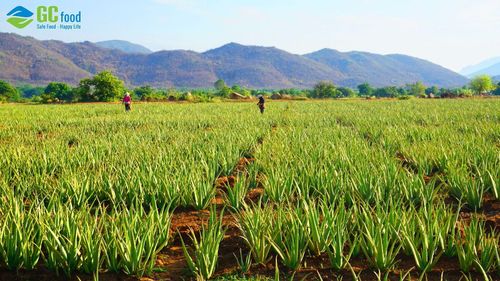
GC Food applies advanced tissue culture technology right from the seed selection stage. Aloe vera plants are propagated in vitro in the laboratory, resulting in seedlings that are uniform in quality and have good disease resistance. This propagation method significantly shortens the growth cycle while ensuring uniform, disease-free, and high-quality seedlings from the outset. Once the seedlings meet the required standards, they are transferred to the Sun & Wind farm for large-scale cultivation under carefully controlled conditions.
As a result, when the plants were transported to the farm in Khanh Hoa, they had a solid foundation to thrive in natural conditions. At the cultivation stage, strict farming practices are implemented in accordance with GlobalGAP standards, including the controlled use of fertilizers and pesticides. Combined with suitable soil and climate conditions, these measures enable the aloe vera plants to develop firm leaves with reduced slime content and enhanced nutritional value.
3.2. Management system based on international standards
GC Food applies international standards such as FSSC 22000, HALAL, and FDA to its quality control system. The control criteria include:
- Input materials: Sensory inspection, microbiological testing, pesticide residue testing andand, heavy metal testing.
- During production: Monitoring temperature, time, equipment hygiene, periodic sampling and testing.
- Final product: Microbiological, physicochemical, sensory testing, packaging and labeling.
GC Food's aloe vera products are all produced using aseptic sterilization technology. Optimizing the production process helps preserve the natural color, flavor, and crispness of the aloe vera. Importantly, this also extends the shelf life of the aloe vera.

4. FAQs - Frequently asked Questions about In Vitro technology
4.1. What benefits does tissue culture technology bring to GC Food products?
In vitro technology enables the rapid propagation of aloe vera plants while maintaining genetic uniformity and disease-free growth. As a result, GC Food can secure a stable supply of seedlings, increase overall productivity, reduce pest and disease management costs, and ensure a consistent year-round source of raw materials
4.2. What makes GC Food's aloe vera different from other products on the market?
GC Food’s aloe vera retains its crisp texture, natural flavor, and low levels of pesticide and microbial residue. The production process complies with internationally recognized standards such as GlobalG.A.P., FSSC 22000, HALAL, and FDA requirements, ensuring product safety, quality consistency, and consumer confidence.
4.3. Where are GC Food's raw material sources (aloe vera farms) located?
GC Food currently manages over 200 hectares of aloe vera plantations in Khanh Hoa Province and several other provinces in the South Central region. These plantations are cultivated in accordance with VietGAP and GlobalG.A.P. standards, achieving an average yield of approximately 550 tons per hectare per year. To further strengthen its supply capacity, the company plans to expand the cultivation area to 500 hectares in the near future, ensuring a stable and reliable source of high-quality raw materials.
Understanding what In Vitro is helps us properly assess the potential of tissue culture technology in improving crop yield and quality. Thanks to the In Vitro method, the process of propagating and cultivating aloe vera is faster and safer, resulting in high-quality aloe vera products. Learn more about GC Food products in the GC Food introduction section!
This article was compiled by the GC Food Team - Experts in natural ingredients.