
 Ms. Lê Thị Ánh Trinh
What is contract farming, and why is it gaining popularity in modern agriculture around the world? In a volatile market, businesses that can manage both the quantity and quality of raw materials are better able to maintain a stable supply chain. In this article, GC Food explains contract farming, its key benefits, and how we apply this model to aloe vera farming.
1. What is contract farming?
Contract farming is a business agreement in which producers or suppliers commit to selling their entire output to a designated partner under predefined terms. By adopting this model, manufacturers can stabilize their supply of raw materials and reduce the risk of input shortages.
Once a contract farming agreement is signed, the supplier is responsible for delivering the agreed quantity on schedule and meeting quality requirements. In return, the contracting company commits to purchasing the full output, ensuring that products are fully purchased without the risk of unsold inventory.
As a result, this contract farming model creates mutual value for both parties. Producers can focus entirely on cultivation and production without worrying about market access or sales channels. Meanwhile, the contracting company is assured of a sufficient and consistent supply, allowing production and distribution activities to run smoothly without disruptions caused by raw material shortages.

2. What are the benefits of contract farming?
To better understand what contract farming is, it is important to look at the benefits this model brings.
2.1 Benefits for producers
One of the clearest answers to what contract farming is lies in the benefits it offers producers. After signing a contract farming agreement, producers are assured of a stable market for their output, allowing them to focus fully on cultivation and production. With a committed purchasing partner secured, suppliers no longer need to worry about market fluctuations or finding buyers. As a result, producers can significantly reduce sales pressure and operate with greater peace of mind.
2.2 Benefits for contracting companies
For companies participating in contract farming, the most immediate advantage is access to a long-term, stable supply of raw materials or products. With a clear understanding of what contract farming is, businesses no longer need to worry about shortages, as producers are committed to delivering consistent volumes under agreed terms. This allows contracting companies to focus on production and distribution rather than sourcing supplies.
Thanks to a secure input supply, manufacturing and distribution processes can operate smoothly and continuously. Product flow remains uninterrupted, business plans stay on schedule, and risks related to supply chain disruptions are minimized. Moreover, during periods of market volatility in demand or pricing, contracting companies are better protected by stable supply arrangements and more predictable input costs.
2.3 Long-term partnership
Contract farming is more than a simple buying and selling agreement; it is a mutually beneficial partnership. Through close collaboration, producers and contracting companies share value and ensure economic benefits are fairly distributed. With a clear understanding of how contract farming works, both parties can take a more proactive approach to building joint business strategies rather than pursuing short-term gains.
In the long run, contract farming also contributes to national economic growth and inclusive development, ensuring no stakeholders are left behind. Producers benefit from a secure market, while contracting companies gain a reliable supply, enabling both sides to grow together and sustain long-term partnerships.
2.4 Positive impact on the market
Once you clearly understand how contract farming works and apply the model effectively, its advantages extend beyond individual stakeholders to the entire market. With a stable supply and well-organized distribution system, the market operates more smoothly and becomes less vulnerable to unpredictable fluctuations.
Through contract farming networks, products can be distributed across a wider range of regions, enabling businesses to reach consumers more efficiently. This broader market presence also supports market expansion, creating favorable conditions for entering new markets and even opening up export opportunities in the future.
3. GC Food’s contract farming model
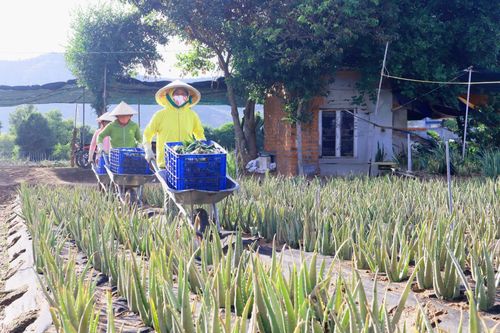
GC Food’s aloe vera growing program is a practical example of the question “What is contract farming?” in real-world agricultural production. Recognizing the advantages of contract farming, G.C Food Joint Stock Company (GC Food) has applied this model to its aloe vera production. Specifically, GC Food partners with farming households in Ninh Thuan (now part of Khanh Hoa Province) to cultivate aloe vera. Thanks to the region’s year-round sunny and windy climate and unique soil conditions, aloe vera plants grown here thrive naturally, with superior flavor and higher nutritional value.
As part of this partnership, GC Food provides F1 seedlings and assigns technical staff to support farmers throughout the planting and cultivation process, ensuring optimal growing conditions. Once the crop reaches maturity, farmers harvest and sell their entire yield to GC Food, with this process repeated consistently across each growing season.
By sourcing fresh aloe vera directly from partner farmers, GC Food secures a stable supply of raw materials with consistent quality and volume, eliminating the risk of supply disruptions or shortages. At the same time, farmers can focus on cultivation with confidence, without concerns about market access, pricing, or market volatility.
4. GC Food’s aloe vera products
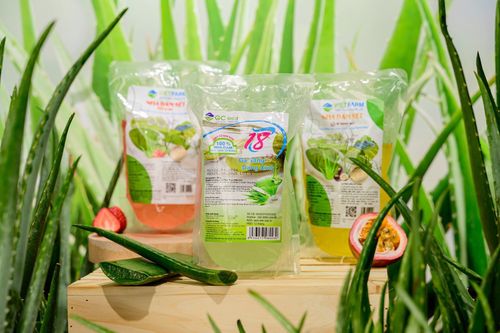
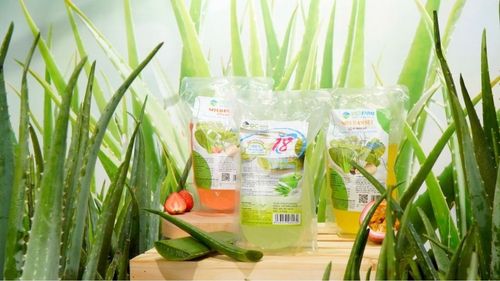
By applying the contract farming model, GC Food’s aloe vera products are produced consistently with uniform quality and flavor. As a result, customers can be confident that each production batch meets the same high standards, without variations in quality from one lot to another.

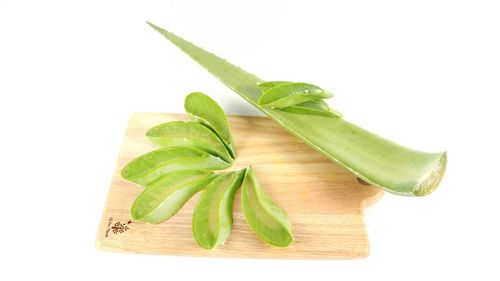
By adopting the contract farming model, GC Food also saves significant time and effort that would otherwise be spent sourcing alternative raw material suppliers. This allows the company to allocate more resources to research and product development. GC Food’s aloe vera portfolio is highly diverse in both texture and flavor - from diced aloe vera and aloe juice to viscous blends and jelly formats, ranging from classic tastes to fruit-flavored varieties - all designed to meet a wide range of customer needs.
Through this article, GC Food has addressed the question “What is contract farming?” and how it works in practice. We hope this has helped you gain a clearer understanding of the implementation and benefits of this model. To explore more insightful content and learn more about G.C Food Joint Stock Company (GC Food), please visit our About Us page.
This article is produced by the GC Food Team - Experts in natural ingredients.