
Smart agriculture is becoming an inevitable choice as production costs continue to rise while demands for product quality grow stricter. In Vietnam, GC Food is among the pioneering enterprises to adopt this model in production. This article explores how the company has gradually applied intelligent systems in agricultural operations.
1. What is smart agriculture?
Smart agriculture refers to a production model that applies advanced technologies across the entire agricultural value chain. Its core objective is to improve operational efficiency, ensure consistent product quality, and reduce negative impacts on the environment.
In Vietnam, this model is gradually being adopted in various sectors, including crop cultivation, livestock farming, and aquaculture. This direction has delivered clear benefits, as national agricultural export turnover in the first quarter of 2024 increased by 21.8 percent compared with the same period last year.
2. Core technologies in the smart agriculture model
In smart agriculture, enterprises typically integrate multiple advanced technologies throughout the production process, including:
Internet of Things (IoT) and sensor systems: These technologies monitor and control environmental factors such as temperature, light, as well as pH in real time, enabling timely adjustments in cultivation.
New agricultural materials: Durable, lightweight, energy-efficient materials such as polymer plastic frames, LED lighting, as well as soil-free growing media are applied to enhance production efficiency.
Robotics and automation: Automated irrigation, misting systems, machinery, as well as robots, are used for planting, crop care, and harvesting, helping reduce labor costs while improving accuracy.
Biotechnology: Tissue culture technology is applied to improve aloe vera varieties. In addition, GC Food utilizes aloe vera byproducts to produce fertilizers as well as biological preparations, enhancing yield and quality while supporting sustainable development.
Artificial intelligence (AI) and management software: These tools analyze production data, support yield forecasting, monitor crop growth, and enable more scientific management of farming operations.

3. Exploring GC Food’s smart agriculture model
G.C Food Joint Stock Company (GC Food) is currently one of Vietnam’s leading producers of coconut jelly and aloe vera products. The company has made comprehensive investments ranging from plant varieties to raw material zones to cultivation systems, ensuring stable and consistent quality across every batch of aloe vera products.
3.1 Application of modern in vitro technology
GC Food applies tissue culture (in vitro) technology to the production of aloe vera seedlings, allowing the company to fully control raw material supply for cultivation. Its tissue culture facility covers 250 square meters and is equipped with 15 double incubators along with a team of 32 specialized staff, achieving an annual capacity of approximately three million seedlings.
In addition, in vitro technology enables rapid propagation with genetic stability as well as consistent quality, helping save time and improve production efficiency. The entire cultivation process is conducted under strictly controlled conditions, ensuring disease-free, healthy seedlings that meet international plant standards.
3.2 Automated cultivation system
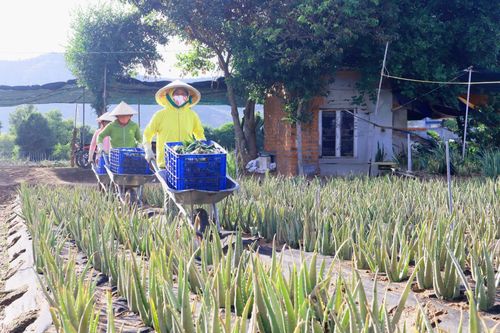
In addition to securing its own plant varieties, GC Food has implemented an automated cultivation system integrated with sensors and plantation management software. This approach allows the company to closely monitor as well as control the yield and quality of each aloe vera batch. The application of advanced technology in farming also helps reduce costs related to water and fertilizer usage.
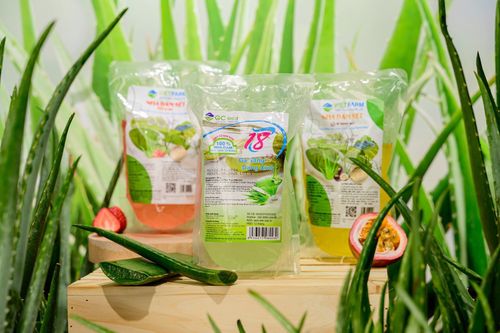
By effectively controlling raw material sources and growing areas, the VietFarm factory (VietFarm Food Joint Stock Company), a member company of GC Food Group, is able to produce approximately 30,000 tons of finished aloe vera products each year. GC Food's ready-to-eat aloe vera products are recognized for their high quality while complying with multiple international standards, including FSSC 22000, HALAL, FDA, and KOSHER.

4. Benefits of the smart agriculture model at GC Food
The implementation of a smart agriculture model has delivered significant advantages for GC Food. This approach enables the company to secure full control over aloe vera seedlings and raw materials while ensuring consistent product quality. The integration of technology into agricultural practices also helps reduce environmental impacts, promotes sustainable farming, and expands export opportunities.
As the agricultural sector faces increasing challenges, smart agriculture is gradually proving its role in improving production efficiency. GC Food has chosen this direction to strengthen raw material autonomy and maintain product quality. For more information about the company’s operations and achievements, please visit the GC Food introduction page.
This article was prepared by the GC Food Team - Specialists in natural ingredients.