
 Ms. Lê Thị Ánh Trinh
The safety and quality of agricultural products are largely determined at the source. What is GlobalGAP, and why is this standard required by many international customers? This article explains how GC Food follows Global Good Agricultural Practices across its 200-hectare aloe vera plantation to ensure clean, safe, and environmentally friendly products, giving consumers greater assurance of safety.
1. What is GlobalGap?
When discussing international agricultural product quality, it’s impossible to ignore GlobalGAP, a term that every reputable producer strives for. So what exactly is the GlobalGAP standard, and why is it important for GC Food’s raw material area?
1.1 Global GAP standard
The GlobalGAP (Global Good Agricultural Practices) standard is an international set of rules for Good Agricultural Practices applicable to crop farming, livestock raising, and aquaculture.
This standard provides guidelines for the production process, based on these core elements:
Consumer safety is maintained by controlling pesticide residues and hygiene during production.
Environmental protection for land, water, and ecosystems.
Ensuring a fair and humane working environment for producers.
The GlobalGAP standard is now applied globally, covering three main sectors:
Agriculture: Vegetables, fruits, industrial crops, flowers, and ornamental plants.
Livestock farming: Cattle, pigs, chickens, sheep, and other livestock and poultry.
Aquaculture: Fish, shrimp, mollusks, and other aquatic products.
1.2. What is GlobalGAP and its meaning
If you don’t know what GlobalGAP is, it is a certification issued by an authorized organization to confirm that a business, cooperative, or growing area has fully implemented Good Agricultural Practices in accordance with GlobalG.A.P. standards.
This certification is a key requirement for agricultural products to access the world’s most demanding markets such as the US, EU, and Japan. Achieving GlobalGAP helps confirm product quality and shows the producer’s responsibility.

2. GC Food's aloe vera raw material area meets GlobalGAP quality standards
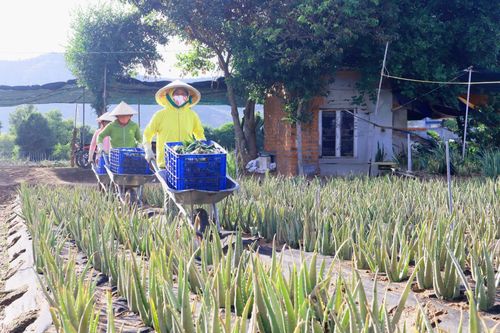
GC Food Joint Stock Company (GC Food) proudly owns a vast aloe vera raw material area, currently covering more than 200 hectares, mainly concentrated in Ninh Thuan and South Central provinces. What makes this growing area different is its development under the strict procedures of both VietGAP and, especially, GlobalGAP standards, the international standard mentioned above. With an impressive yield of up to 550 tons per hectare per year, GC Food not only has a stable supply but also commits to the quality of its input products.

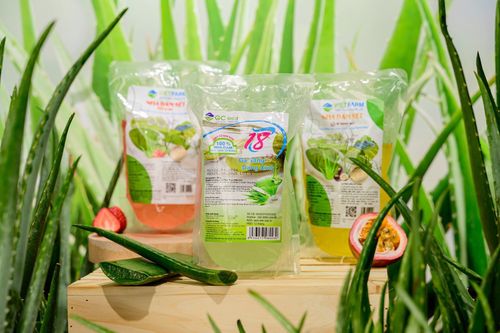
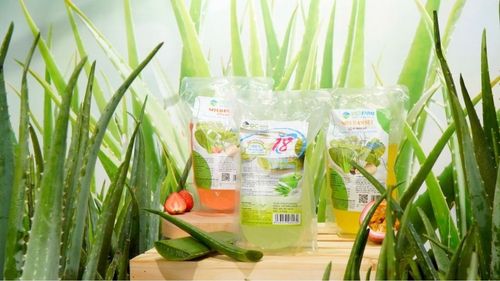
Alongside its cultivation areas, GC Food uses in vitro propagation technology to produce up to 3 million high-quality seedlings each year, maintaining full control over a disease-free seed supply chain. VietFarm Food Joint Stock Company (a member of the GC Food Group) can stably process 150 tons of fresh aloe vera leaves per day. This enables the company to consistently produce high-quality aloe vera jelly, meeting the demanding requirements of both domestic and international customers. Over the next few years, GC Food plans to expand its raw material sourcing area to 500 hectares.
With a closed-loop production system and a strong focus on quality, GC Food continues to build the reputation and value of its aloe vera products, meeting GlobalGAP standards and providing safe products for customers and partners.
3. GlobalGAP certified aloe vera farm: An ideal source of clean raw materials
GC Food's aloe vera product lines are consistently high in quality, thanks to raw materials sourced from the Sun & Wind farm. This area is not only a major aloe vera growing region but also follows GlobalGAP standards for agricultural cultivation.
3.1. Characteristics of soil layer
Ninh Thuan has unique soil conditions: a layer of fertile alluvial soil blended with coastal sandy soil. This land has fast-draining properties, meaning the soil doesn’t retain moisture for long, allowing aloe vera plants to grow under optimal conditions, with thick, crisp flesh and consistently high quality, meeting the requirements of the GlobalGAP standard for cultivation environment.
3.2. Climate conditions
The hot, dry climate characteristic of Ninh Thuan is a factor that promotes the vigorous growth of aloe vera. Due to low rainfall and a dry environment, aloe vera plants are protected from fungal diseases and natural pests. Therefore, farmers can use fewer pesticides, increasing productivity and improving raw material quality, fully comply with GlobalGAP's food hygiene and safety requirements.

3.3. Competitive advantages of applying GlobalGAP standards
Thanks to favorable natural conditions, aloe vera in Ninh Thuan can be harvested in large volumes while continuously supplying fresh and stable raw materials for GC Food's production. More importantly, the farms here consistently apply modern farming methods, combining advanced agricultural technology, and strictly adhere to GlobalGAP standards from selection and care to harvesting. This confirms that GC Food’s aloe vera is made to meet strict global quality requirements.
Overall, GC Food's ownership of a large aloe vera raw material area and its strict application of GlobalGAP standards is not only a guarantee of quality but also a demonstration of responsibility towards consumer health and environment. So now that you know what GlobalGAP is, you can make an informed decision and choose aloe vera products from GC Food. This is proof of a clean, safe, and internationally standardized production process.
This article was compiled by the GC Food Team – Experts in natural ingredients.