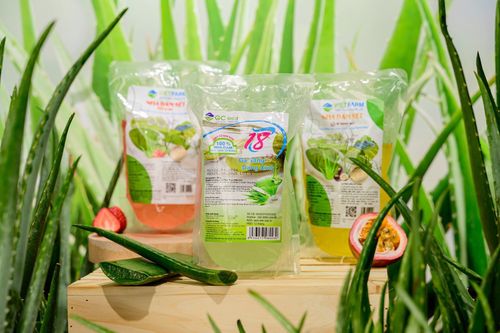

The HACCP standard helps control production processes and minimize errors related to food safety and hygiene. GC Food applies this system throughout its entire operation chain, from the Sun & Wind farm to the VietFarm factory. In this article, let’s explore what HACCP is, its benefits and how GC Food applies it to the aloe vera production process.
1. What is the HACCP standard?
HACCP standard (Hazard Analysis and Critical Control Points) is a food safety management system based on the identification, evaluation and control of potential hazards throughout the entire production chain.
Unlike traditional inspection systems that primarily rely on post-production testing, the HACCP standard establishes a continuous monitoring process. At each stage, businesses identify Critical Control Points (CCPs), conduct real-time monitoring, and implement corrective actions when deviations occur. As a result, products are consistently maintained in optimal condition before reaching consumers.
2. Benefits of the HACCP standard in food safety
To operate a safe and stable food production process, businesses require a robust risk management system. HACCP meets this requirement and delivers significant value to both consumers and GC Food.
2.1 Benefits of the HACCP standard for consumers
For consumers, HACCP helps eliminate hazards such as microorganisms, heavy metals, chemical residues and cross-contamination during processing. As a result, customers receive products with consistent taste, color and texture, while also ensuring food safety and hygiene. This is particularly important for products such as aloe vera and coconut jelly.

2.2 Benefits of HACCP for GC Food
For GC Food, the HACCP standard enables effective risk control across the entire production chain. Aloe vera is a raw material that is highly susceptible to microbial contamination if preliminary processing is delayed. Therefore, GC Food proactively implements strict supervision at every stage, from harvesting, mucilage removal, blanching, and aseptic treatment to final packaging.
At the same time, HACCP enhances traceability, as all data related to cultivation plots, fertilizer types, harvest timing, processing conditions, and sterilization procedures are transparently recorded. HACCP not only meets the stringent requirements of demanding markets such as the United States but also enables GC Food to respond quickly and accurately to incidents when necessary.
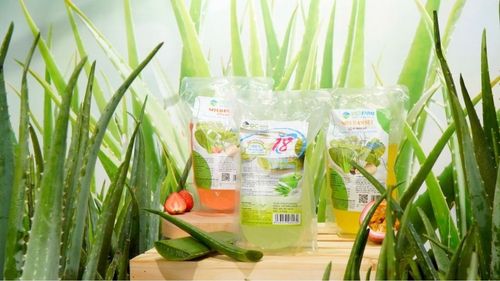
From Aseptic aloe vera , Crispy Aloe Vera and Aloe Vera Jelly to Aloe Vera Juice, all GC Food products are operated under the same HACCP principles. As a result, the quality of GC Food’s aloe vera products remains consistent and stable.
3. How GC Food applies the HACCP standard to the aloe vera production process
GC Food implements HACCP through three main layers of control, in combination with FSSC 22000, FDA and HALAL standards, to establish a comprehensive management system.
3.1 Control of raw materials
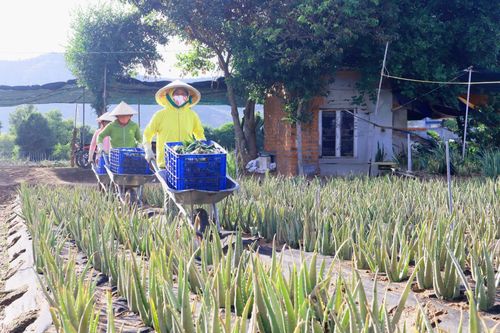
GC Food sources its raw materials from GlobalGAP - certified aloe vera farms in Khanh Hoa (formerly Ninh Thuan). The region’s hot and dry climate, alluvial soil, and good drainage conditions result in aloe vera with thick flesh, low mucilage content, and minimal pest infestation.
Before preliminary processing, each batch of aloe vera undergoes the following procedures:
Visual inspection of color, odor, and freshness.
Sampling and testing for pesticide residues, heavy metals, and microbiological contaminants.
Supplier evaluation and traceability verification.
This is the most critical stage, as the HACCP standard helps determine and ensure the quality and safety of input raw materials.

3.2 Control during the production process
At VietFarm Food Joint Stock Company (VietFarm), Critical Control Points (CCPs) are established at the following four stages:
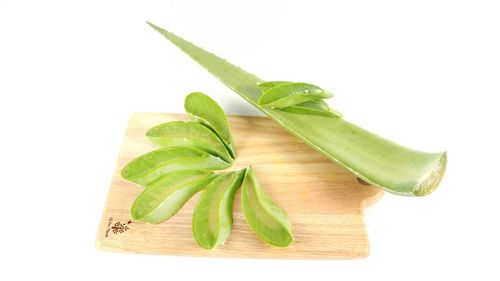
Mucilage removal: Aloe vera is preliminarily processed, cut into cubes, and blanched under continuous supervision to eliminate bitterness and reduce microbial levels.
Pasteurization: For the aseptic aloe vera product line, the product undergoes high-temperature heat treatment followed by rapid cooling to preserve color and maintain a clear structure.
Environmental control: Equipment, production surfaces, and washing water are periodically tested for microbiological safety. Personnel are trained in hygiene practices and standard operating procedures.
Continuous monitoring: Parameters such as temperature, time, and physicochemical concentrations are recorded and checked at frequencies specified by HACCP requirements.
3.3 Finished product control
Before delivery, each batch of aloe vera products is tested in accordance with HACCP standards, including:
Microbiological criteria: Total plate count, E. coli, coliforms, yeasts, molds.
Physicochemical criteria: Crispness, clarity, pH level, texture.
Sensory evaluation: Aroma, taste, color.
Packaging materials (PA/PE bags, aseptic sterile bags, etc.) are also inspected to ensure integrity and suitability for the product. In addition, GC Food retains finished product samples in compliance with HACCP standards to support traceability when necessary.

4. FAQs - Frequently asked questions about the HACCP standard
4.1 Is compliance with HACCP mandatory in food production?
The HACCP standard is not mandatory for all food sectors. However, for businesses producing highly perishable products such as beverages, aloe vera, meat, and seafood, HACCP is considered an essential standard to ensure food safety and facilitate market expansion.
4.2 Is HACCP the same as FSSC 22000 or ISO 22000?
They are not the same, but they are closely related. FSSC 22000 and ISO 22000 are comprehensive management systems, while HACCP is a hazard analysis method applied within those systems. GC Food implements both simultaneously to enhance control effectiveness.
4.3 Does implementing HACCP increase production costs?
Yes, costs related to monitoring, supervision and training may increase. However, the risk of product defects is significantly reduced when HACCP food safety standards are applied to the production process.
At GC Food, the implementation of HACCP goes beyond technical compliance and becomes an integral part of the company’s sustainable development strategy. From GlobalG.A.P. - certified raw material regions to modern processing lines, GC Food is building a transparent, safe, and reliable HACCP-based food safety system. Through these efforts, we contribute to enhancing the position of Vietnam’s food industry in the international market.
If you are interested in purchasing aloe vera and coconut jelly products or would like to learn more about HACCP standards, please visit the About us section.
This article was compiled by the GC Food Team - Experts in natural ingredients.