
 Ms. Lê Thị Ánh Trinh
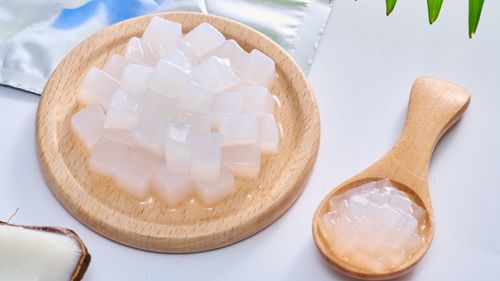
Raw coconut jelly cube is produced through fermentation of mature coconut water by Acetobacter xylinum, forming a firm cellulose layer with a naturally crisp and chewy texture. In its raw state, the jelly remains in large blocks and is not cut or sweetened, then it can be further processed into nata de coco used in foods or drinks.
1. What is a raw coconut jelly cube?
Main ingredient: Mature coconut water
Formation process: Fermented from coconut water by the bacterium Acetobacter xylinum
Structure: Plant cellulose with a naturally crisp and chewy texture
Raw condition: Not pressed to reduce water and not soaked in sugar
Difference from dried nata de coco: Dried coconut jelly is a raw coconut jelly cube that has been pressed to reduce water for easier storage
Application: Ingredient for food and beverage processing
Raw nata de coco (raw coconut jelly cube) is a product formed through the fermentation of mature coconut water by the bacterium Acetobacter xylinum. This converts the natural sugars in coconut water into a network of tightly bound cellulose fibers that gradually create a thick jelly layer.
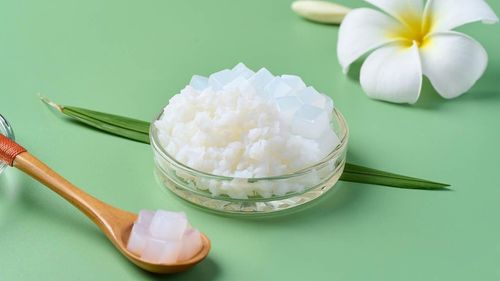
At this stage, the product exists as large jelly slabs with a milky white or ivory color and a firm, crisp texture that is typical of nata de coco. The term “raw” refers to nata de coco that has just completed the cultivation stage and only undergone basic cleaning processes before any flavoring agents or preservatives are added.
2. What is a raw coconut jelly cube made from?
Similar to topping nata de coco used as a topping, the main ingredients that create raw nata de coco are mature coconut water and the bacterium Acetobacter xylinum. During processing, producers often add essential nutrients such as ammonium sulfate or acetic acid to adjust the pH level to a suitable range for bacterial growth.
After about 7 to 10 days of fermentation under appropriate temperature and pH conditions, a thick cellulose layer gradually forms on the surface of the solution. Once harvested, this cellulose layer becomes raw nata de coco and it can then be further processed to produce other nata de coco products used in food or beverages.

3. What is the difference between a raw coconut jelly cube and dried nata de coco?
Raw coconut jelly cube and dried nata de coco are names that refer to the same basic material produced through the fermentation of mature coconut water by the bacterium Acetobacter xylinum. This biological process forms a layer of plant cellulose with a distinctive crisp and chewy structure that is commonly known as nata de coco.
After harvesting, the jelly layer is washed thoroughly and it becomes a semi-processed ingredient in the nata de coco production process. At this stage, the product is often called raw jelly because it still retains a high water content, and it has not undergone further processing such as water reduction, sweetening, or transformation into a finished product.
In contrast, the term dried nata de coco usually refers to a raw coconut jelly cube that has been pressed to remove part of the water. Once the moisture content is reduced, the product can be packaged and distributed to food processing factories or businesses in the food and beverage industry.
To make it easier to distinguish raw coconut jelly cubes, dried nata de coco, and finished nata de coco products, you can refer to the comparison table below:
4. When is raw coconut jelly cube used?
In coconut-based food production, raw coconut jelly cubes are commonly used as an input material for later processing stages in the manufacturing chain. After harvesting, the jelly is treated through several steps to create finished products that meet different consumption needs.
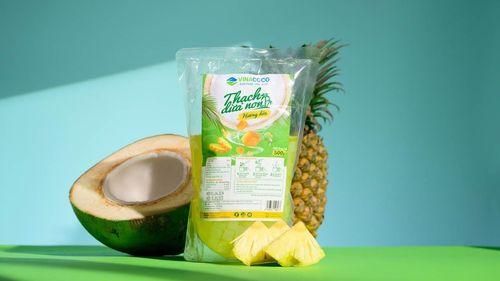
Food manufacturers often use this ingredient to produce nata de coco toppings or nata de coco soaked in fruit-flavored syrup. Thanks to its natural cellulose structure with a firm, crisp texture, nata de coco is widely used in bottled beverages or fruit yogurt products.
5. Applications of raw coconut jelly cube in the food industry
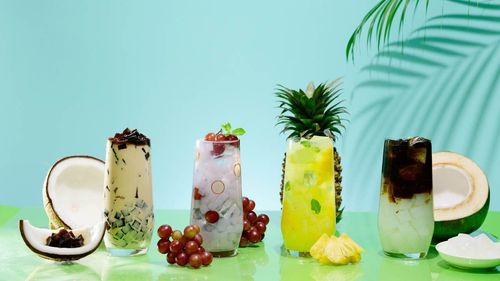
With its light, crisp texture and refreshing taste, raw coconut jelly cube is commonly combined with many familiar foods in daily cuisine. This ingredient is often used as a topping for ice cream, sweet soups, or milk tea and it can also be mixed with milk or fresh fruit to create refreshing snacks. In addition, nata de coco appears in many attractive drinks, such as nata de coco with chia seeds, nata de coco with rock sugar, or nata de coco with butterfly pea flower to bring a fresh and interesting touch to summer menus.

6. Current production process of raw coconut jelly cube
The production of raw coconut jelly cubes are usually carried out through several sequential stages that begin with ingredient preparation plus bacterial cultivation and end with harvesting or basic processing of the fermented jelly layer.
6.1 Step 1: Cultivation and fermentation
After harvesting, coconut water is pasteurized and the bacterium Acetobacter xylinum is added to begin the fermentation process. Under suitable temperature plus pH conditions, the bacteria convert the natural sugars in coconut water into cellulose and gradually form a jelly membrane on the surface of the solution. After about 7 to 10 days, when the cellulose layer reaches the required thickness, producers can harvest large slabs of raw coconut jelly cubes from the fermentation medium.
6.2 Step 2: Preliminary processing of raw jelly
The nata de coco is soaked in clean water until it expands evenly and the remaining sour smell from fermentation gradually decreases. In some cases, the jelly is sent through a slicing system to create suitable shapes for later processing purposes.
After shaping, the nata de coco continues to be washed in clean water to adjust the pH level and remove remaining impurities inside the jelly pieces. This stage helps the material reach a more stable condition before it moves to the next processing stage if required.
6.3 Step 3: Packaging
After completing the previous steps, the nata de coco is packaged for storage or delivery to customers. The material can also be packed without sugar and it may later be processed further to produce dried nata de coco or finished nata de coco products.
7. Where can you buy high-quality raw nata de coco?
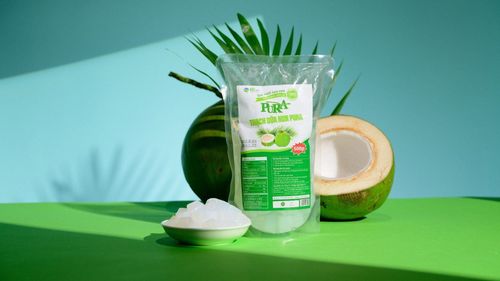
If you are looking for a stable source of raw nata de coco for food processing or business activities, you can consider pressed nata de coco produced by GC Food Joint Stock Company (GC Food). In practice, pressed nata de coco is a form of raw jelly that has been pressed to reduce water for easier storage and transportation, while the cellulose structure formed from coconut fermentation remains intact.
The product has a pH level below 4.5 and several pressing ratios, such as 1:5, 1:6, 1:8, or 1:10, with size options from 5 to 15 mm that are suitable for beverages, toppings, or desserts. The jelly is packed in PAPE bags inside 10 - 20kg carton boxes or in PAPE bags combined with PP outer bags from 20kg to 25kg. The product can be stored at room temperature in a dry well-ventilated environment and it has a shelf life of up to twelve months from the production date.
In addition to pressed nata de coco, GC Food also produces several other types of nata de coco ingredients for different processing needs.
Signature nata de coco features a distinctive crisp as well as chewy texture with a mild sweetness and it is suitable for many beverages or dessert applications.
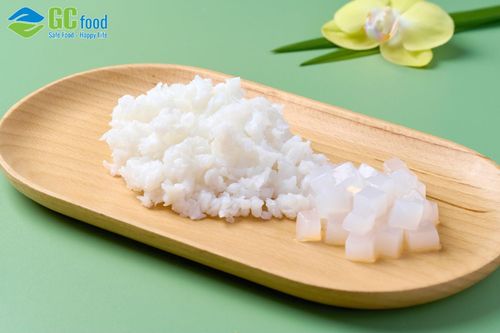
Cubed nata de coco is cut into small square pieces of different sizes and it is designed to meet the preparation needs of businesses in the F&B.
Shaped nata de coco is produced in various forms such as hearts, strands, sticks, stars, or pomegranate cubes and it helps improve the visual appeal of drinks or desserts.
In particular, GC Food nata de coco products apply modern Pasteurization technology. This technology preserves the fiber structure of nata de coco and maintains its fresh flavor with a naturally crisp texture, so the jelly does not become soft during long soaking in liquid. GC Food also applies aseptic sterilization technology for export batches and this method helps extend shelf life without the need for preservatives. Thanks to abundant raw materials and an advanced production process, GC Food nata de coco has successfully entered demanding markets such as Japan, South Korea, as well as Europe.
8. FAQs - Common questions when searching for raw coconut jelly cube
When looking for raw nata de coco, many buyers often pay attention to the origin of ingredients, product condition, usage methods, and storage guidance. The following questions are commonly asked and they are summarized by GC Food to help readers understand this ingredient more clearly.
8.1 What is raw nata de coco made from?
This jelly is produced through the fermentation of mature coconut water by the bacterium Acetobacter xylinum. The fermentation process creates a layer of plant cellulose with a firm, crisp structure that is widely known as nata de coco.
8.2 Is a raw coconut jelly cube the same as dried nata de coco?
In practice, dried nata de coco and raw coconut jelly cubes usually refer to the same basic jelly ingredient plus the difference mainly relates to the naming convention. After fermentation from coconut water, the jelly is washed and pressed to reduce water content, so storage or transportation becomes more convenient. At this stage, the product may be described as a raw coconut jelly cube or dried coconut jelly, depending on the processing condition.
8.3 Can raw nata de coco be eaten directly?
In most cases, the product is not consumed immediately after harvesting because it still contains a mild sour smell from fermentation. The jelly should be washed thoroughly, then cut into smaller pieces and cooked with sugar syrup before being served with drinks or desserts.
8.4 What is a raw coconut jelly cube used for?
The product is mainly used as a raw ingredient in the food processing industry. After basic preparation, the jelly can be cut into cubes or strands to create toppings for sweet soups, yogurt, milk tea, ice cream, or other dessert dishes.
8.5 How should raw nata de coco be stored?
The jelly is usually stored in a dry and well-ventilated environment to limit the continuation of fermentation activity. In addition, nata de coco may be soaked in clean water or treated further to stabilize product quality before packaging.
At this point, you can understand what a raw coconut jelly cube is, as well as you can also distinguish between raw coconut jelly and dried nata de coco more clearly. If you would like to learn more about nata de coco ingredients or the production process, you can visit the GC Food website to explore more details about us and our products as well as services.
This article is compiled by the GC Food Team - Specialists in natural food ingredients.