
 Ms. Lê Thị Ánh Trinh
When businesses search for where to buy nata de coco, wholesale buyers often prioritize consistent quality and a reliable long-term supply. While raw nata de coco is available from wholesale markets, F&B ingredient distributors, and factories, finding a supplier that meets food safety standards and maintains stable quality can still be challenging.
1. Where to buy nata de coco?
The raw nata de coco market is currently divided into three main segments, each serving different types of buyers. Depending on your business scale, you can choose the most suitable place when deciding where to buy nata de coco:
Wholesale ingredient markets: These markets typically offer a wide range of nata de coco products from small-scale producers, often at highly competitive prices.
F&B ingredient distributors: A convenient option for milk tea shops, bakeries, or dessert stores that want to purchase nata de coco along with other toppings in the same order.
Direct manufacturers: The preferred choice for exporters and large beverage chains that require products meeting international quality standards.
For wholesale buyers, buying directly from a manufacturer is usually more advantageous than buying through distributors or retail suppliers. Sourcing nata de coco from a factory ensures a more stable supply, better pricing without intermediaries, and verified quality certifications, giving businesses greater confidence for long-term operations.

2. Quick comparison of popular raw nata de coco purchasing channels
Below is a quick comparison of the most common sources for raw nata de coco available on the market today:
3. Factors that affect bulk raw nata de coco prices
In addition to considering where to buy nata de coco, it is also important to understand the factors that influence the final wholesale price:
Coconut water quality: Nata de coco fermented from pure mature coconut water, especially from regions like Ben Tre, typically costs more than products made with diluted or mixed ingredients.
Cut size and shape: Nata de coco processed with modern cutting machines and uniform sizes is usually priced higher than raw sheets that have not been cut.
Quality certifications: Products with certifications such as FSSC 22000 or Halal, which are required for export markets, generally cost more than unverified products with unclear origins.
Seasonal demand: During peak periods, such as summer, when market demand rises sharply, nata de coco prices may fluctuate if there is no long-term supply contract.
Order volume: Larger orders typically receive better pricing, while smaller purchases or orders made through distributors tend to be more expensive due to additional distribution costs.
For this reason, when selecting a supplier, businesses should evaluate supply stability, order volume, and product standards together before making a purchasing decision.
4. Specifications and wholesale purchasing conditions for raw nata de coco
When exploring where to buy nata de coco, it is important to review product specifications to ensure compatibility with your production line or beverage recipes. Below are common technical standards and purchasing conditions typically applied by wholesale suppliers.
4.1 Product specifications
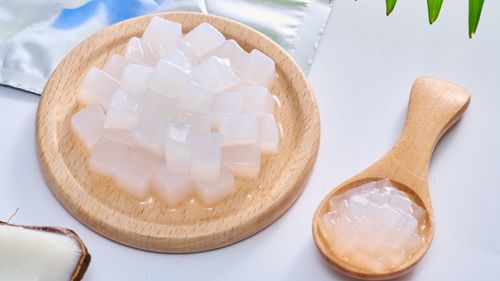
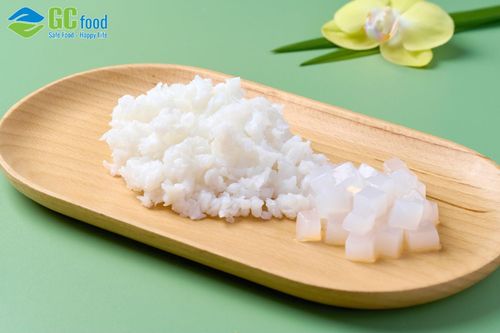
Today’s wholesale nata de coco market offers a wide variety of processing formats to serve different segments, from industrial food production to retail consumption. Raw nata de coco usually has a pH range of 3.0 - 4.5, with compression ratios such as 1:5, 1:8, or 1:10, depending on the desired texture and firmness. In addition to the traditional cube-shaped nata de coco, the market also provides creative formats such as star-shaped, heart-shaped, stick-cut, or shredded, which are commonly used for premium signature beverages and specialty desserts.

4.2 Packaging and weight specifications
To optimize long-distance transportation and storage, raw nata de coco is typically packed in several different formats:
Bag and carton packaging: A 10 kg or 20 kg carton usually contains multiple smaller PAPE bags for convenient handling and distribution.
PP woven bags: For manufacturing ingredients, nata de coco is often packed in large PP bags weighing 20 - 25 kg, helping reduce packaging costs.
Cans or plastic jars: Formats such as 850 g cans or plastic jars ranging from 1 - 3.8 kg are commonly designed for food service businesses.
Aseptic drum packaging: For large-scale industrial production, nata de coco is packed in sterile aseptic bags placed inside 200 kg steel drums, ensuring product safety and extended shelf life during bulk transportation.
4.3 Minimum order quantity (MOQ)
Depending on where to buy nata de coco, the minimum order quantity can vary significantly. For example:
E-commerce platforms and local markets: These channels usually have little to no minimum order requirement. Customers can buy as little as 0.5 - 1 kg for personal use or small-scale testing.
Distributors and wholesale markets: Buyers are typically required to purchase according to standard packaging formats, such as 5 kg bags or full cartons of 10 - 20 kg, to receive better wholesale pricing.
Manufacturing factories: Producers often apply larger MOQs ranging from several hundred kilograms to multiple tons. They can also provide a stable supply for export-scale orders, typically 17 tons (20FCL) or 26 tons (40FCL).
4.4 Delivery time and transportation
Depending on the geographical distance, the time from order confirmation to delivery usually ranges from a few days to about one week. When purchasing from local sellers on e-commerce platforms within the same province or city, customers may even receive their orders on the same day or within 1 - 2 days.
For wholesale purchases through distributors, delivery time often depends on the scheduled transport routes available each week. In cases where orders require custom cube sizes or specific compression ratios, the production and delivery process may take approximately 5 - 7 working days.
4.5 Storage and shelf life
The product should be kept at room temperature in a dry, well-ventilated place, away from direct sunlight. Under proper storage conditions, it typically has a shelf life of up to 12 months from the production date. Once the packaging is opened or the nata de coco has been soaked or processed, it should be stored in a refrigerator and consumed within a short period to prevent bacterial contamination.
4.6 Certifications
If you purchase raw nata de coco from local markets or small shops, sellers often rely on verbal assurances of quality, making it difficult to request microbiological or physicochemical test reports for each batch. However, when sourcing from authorized distributors, buyers usually receive official invoices, product quality declarations, and technical indicators such as pH levels (3.0 - 4.5) or Brix levels (0 - 22). For international shipments, suppliers should provide certifications such as FSSC 22000, ISO, or Halal to ensure smooth export and compliance with global food standards.
5. Criteria for choosing a professional raw nata de coco supplier
Choosing the wrong supplier can affect not only the taste of your beverages but also pose potential food safety risks to your brand. Therefore, when researching where to buy nata de coco, it is important to carefully evaluate the following factors:
Actual production capacity: The supplier should operate a large-scale manufacturing facility to ensure a stable supply and avoid disruptions during peak seasons, especially in hot summer months.
International certification system: Prioritize suppliers that meet recognized standards such as FSSC 22000 or HACCP to ensure food safety compliance.
Modern processing technology: Nata de coco should be produced using Pasteurization technology, which helps maintain its natural crunchy texture without relying on chemical preservatives.
Location and logistics: It is beneficial to source from suppliers located near major coconut-growing regions, such as Ben Tre, to reduce logistics costs while maintaining product freshness.
6. GC Food - A trusted raw nata de coco supplier in Vietnam
If you are wondering where to buy nata de coco and which supplier can provide reliable wholesale quality, G.C Food Joint Stock Company (GC Food) is a trusted choice. The VINACOCO factory (Vinacoco Food Joint Stock Company), a member of GC Food Group, spans 11,000 m² with a capacity of 15,000 tons per year. This allows GC Food to maintain a stable supply of raw nata de coco that meets international quality standards.

GC Food also applies Pasteurization technology in the production of raw nata de coco. This process effectively eliminates harmful bacteria such as E. coli and Salmonella. At the same time, it preserves the natural cellulose fiber structure, giving GC Food’s nata de coco its signature crunchy texture, refreshing taste, and natural nutritional value.
For export orders, GC Food utilizes an Aseptic UHT sterilization system, which sterilizes the product at high temperatures and fills it into sterile packaging to minimize the risk of bacterial contamination. This technology also helps extend the product’s shelf life without the use of chemical preservatives.
Thanks to these advanced technologies, GC Food’s nata de coco products have achieved recognized certifications such as FSSC 22000 and Halal. In addition, GC Food offers a wide range of sizes and shapes, meeting diverse needs from large-scale industrial production to small business operations.
7. FAQs about where to buy nata de coco
7.1 What is the minimum order quantity (MOQ) for raw nata de coco?
For wholesale orders placed directly with factories, the minimum order quantity (MOQ) usually ranges from several hundred kilograms to one ton to ensure efficient production and logistics. However, customers can contact the supplier’s sales team directly to discuss a more suitable MOQ based on their specific needs.
7.2 Can raw nata de coco be exported?
Yes, raw nata de coco can be exported to international markets if the supplier meets strict food safety certifications such as FSSC 22000, ISO, or Halal. It is important to carefully review the supplier’s legal documentation and packaging specifications to ensure smooth customs clearance in the destination country.
7.3 How long can raw nata de coco be stored?
Raw nata de coco produced using modern manufacturing processes typically has a shelf life of around 12 months from the official packaging date. However, the shelf life may be shorter if the product is manually packaged or does not meet proper pasteurization and aseptic processing standards.
7.4 How long does delivery take for wholesale orders?
Delivery lead time typically ranges from a few days to 1 - 2 weeks, depending on the order volume, delivery location, and the supplier’s production schedule. For large orders or long-distance shipments, buyers should coordinate with the supplier in advance to plan their raw material procurement more efficiently.
7.5 Can I request samples before placing a bulk order?
Many suppliers are willing to provide product samples so buyers can evaluate the quality before placing a large order. This allows customers to assess the texture, color, and overall suitability of the nata de coco for their intended use.
7.6 Does raw nata de coco require refrigeration?
Unopened nata de coco products can usually be stored at room temperature in a dry, well-ventilated area away from direct sunlight. However, once the packaging has been opened or the product has been soaked or processed, it should be stored in the refrigerator to prevent bacterial contamination.
GC Food hopes this article has helped answer the question of where to buy nata de coco, making it easier for you to find a supplier that best fits your needs. For detailed consultation on bulk nata de coco pricing, please visit the GC Food company introduction page.
This article was prepared by the GC Food Team - Specialists in natural ingredients.