
 Ms. Lê Thị Ánh Trinh
The food safety-compliant nata de coco production process ensures both product quality and consumer safety. From selecting coconut water and natural fermentation to washing, cutting, packaging, and pasteurization, each step is strictly controlled. Understanding how raw nata de coco is produced helps ensure hygiene standards and safe consumption.
1. What is the nata de coco production process?
The nata de coco (or coconut jelly) production process is the method of creating jelly from mature coconut water through natural fermentation. Coconut water is fermented with the bacterium Acetobacter xylinum to form a firm and chewy layer of cellulose gel. The jelly is then cleaned, cut into pieces, soaked in sugar syrup, pasteurized, and packaged.
The raw coconut jelly production process generally includes the following main steps:
Coconut water filtration: After harvesting, the coconut water is filtered to remove impurities and then pasteurized.
Bacterial inoculation and heating: A suitable environment is created for fermentation by adding the fermentation bacteria and applying controlled heat.
Fermentation: The bacteria convert sugars in the coconut water into a thick layer of cellulose jelly.
Cleaning and shaping: The jelly is soaked in clean water to expand evenly, then shaped into strips or cubes and cooked under pressure.
Packaging: The coconut jelly is packed into bags, undergoes final pasteurization, and is then distributed to the market.
2. What is raw nata de coco?
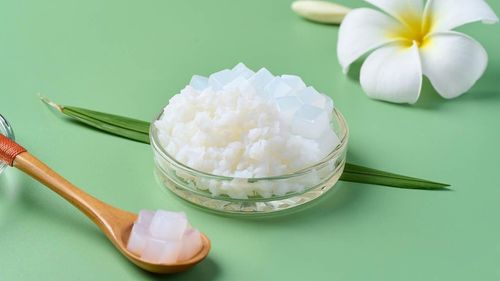
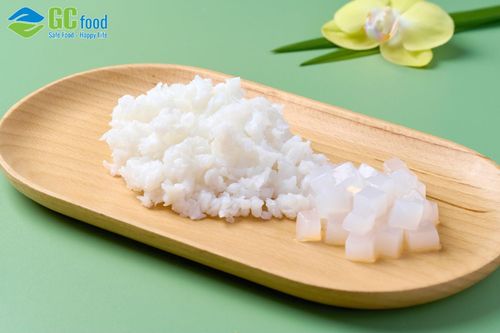
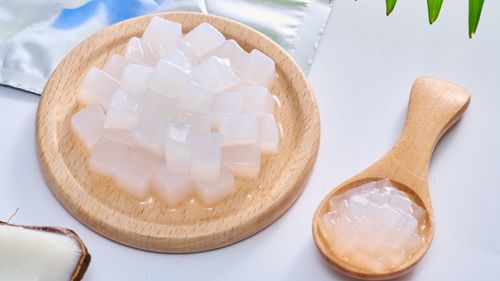
Raw nata de coco is a product made from mature coconut water. After harvesting, the coconut water is pasteurized and then incubated with a biological starter culture for a specific period. Once the fermentation process is complete, the coconut water solidifies into translucent, white jelly-like layers with an appealing appearance.
This type of jelly retains its natural flavor and is commonly used in snacks and desserts. During hot summer days, raw coconut jelly is especially popular for its refreshing texture, mild sweetness, and thirst-quenching qualities.
3. Raw nata de coco production process at the factory
The production of raw nata de coco at the factory is carried out through the following main steps:
Pasteurizing coconut water and adding bacterial culture
Culturing and fermenting to form the jelly layer
Harvesting and washing the jelly
Soaking, slicing, and cutting into shape
Second soaking and rinsing to increase pH
Cooking and sterilizing
Filling with syrup, pasteurizing, and packaging
Each stage is strictly controlled to ensure product quality, safety, and consistency before distribution to the market. Below are the detailed stages of the process:
3.1. Culturing and fermentation stage
After harvesting, mature coconut water is thoroughly pasteurized and inoculated with Acetobacter xylinum. Under suitable temperature and pH conditions, the bacteria convert sugars in the coconut water into cellulose, forming a natural jelly layer. After 8 - 10 days, the thick jelly layer is harvested, washed, and moved to the processing stage.
3.2. Processing, shaping and treatment stage
Soaking, slicing, and cutting: The jelly is soaked to expand evenly and become whiter, then sliced and cut into cubes or strips.
Second soaking: The jelly is soaked again in clean water to increase pH and ensure thorough cleaning.
Cooking: The jelly is cooked in a modern pressure cooker to ensure sterilization and food safety compliance.

3.3 Packaging and distribution
After processing, the coconut jelly is filled into bags or containers with syrup to enhance its flavor. Finally, the product undergoes a modern pasteurization process to ensure stable quality and compliance with food safety standards before distribution.
4. GC Food - An internationally standardized safe nata de coco manufacturer
4.1. Vinacoco - A modern nata de coco production factory
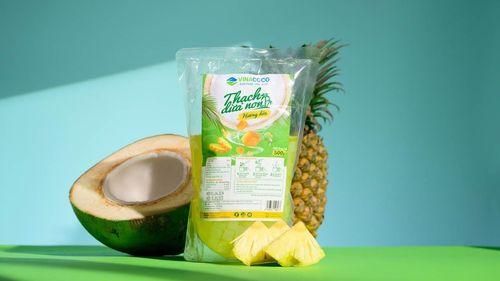
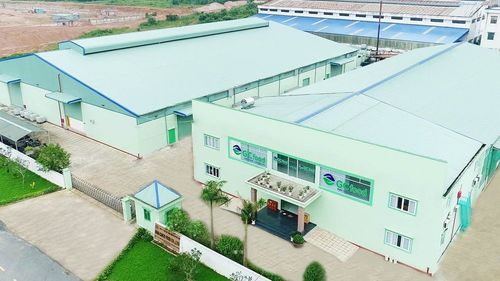
In 2016, G.C Food Joint Stock Company (GC Food) established Viet Nam Coco Food Joint Stock Company (VINACOCO) in Dong Nai Province, marking the first major step in developing a modern coconut jelly industry in Vietnam. This milestone also reflects GC Food’s commitment to enhancing the value of Vietnamese agricultural products.

4.2. Modern production technology meeting food safety standards
GC Food applies modern Pasteurization technology to eliminate harmful microorganisms without the use of preservatives, helping preserve the natural flavor and texture of coconut jelly. For export products that require higher standards, GC Food utilizes Aseptic UHT technology, which sterilizes at high temperatures and fills products in a sterile environment to minimize contamination and ensure consistent quality.
At the same time, GC Food invests in modern machinery that meets international standards, combining equipment imported from Europe with machines designed by domestic engineers. The nata de coco production process consists of 17 strictly controlled stages to ensure natural taste and food safety. As a result, VINACOCO has obtained prestigious certifications such as FSSC 22000, FDA, and GACC, and its products are exported worldwide.
4.3. Aiming to conquer the global market
To appear on the international food map, GC Food’s nata de coco must pass a series of rigorous inspections for quality, safety, and nutritional value. Being granted export licenses not only reinforces the brand’s credibility but also demonstrates the global appeal of Vietnamese agricultural products.
In the coming period, GC Food aims to expand into highly populated and promising markets such as China, India and Indonesia. These countries are increasingly embracing low-calorie, high-fiber and health-friendly food trends, which are expected to further boost the popularity of coconut jelly as a widely favored ingredient.

GC Food’s internationally standardized coconut jelly production process is a combination of advanced technology, strict quality control and a commitment to sustainable development. As a result, every product delivered to consumers not only meets high-quality standards but also represents continuous efforts to elevate the value of Vietnamese agricultural products in the global market.
5. Frequently asked questions about the nata de coco production process
5.1. What is raw nata de coco used for?
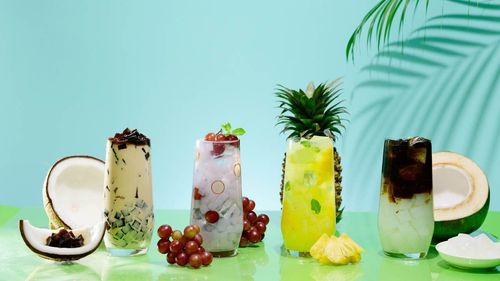
Raw nata de coco is used to prepare desserts after being pre-processed, adding a chewy and refreshing texture. It can also be used as a topping for bubble tea and sweet soups, or combined with fruits, yogurt, and chia seeds to create a light, low-calorie snack.
5.2. How does industrial coconut jelly production differ from handmade production?
Handmade coconut jelly production is typically small-scale, with many steps performed manually and simpler quality control. In contrast, industrial production uses modern machinery, a closed processing system and strict control from raw materials to finished products. As a result, industrial products offer consistent quality, ensure food safety, and meet export standards.
5.3. Is the nata de coco production process safe?
The nata de coco production process at reputable factories is safe and hygienic thanks to a closed, automated system with strict control from raw materials and fermentation (using Acetobacter xylinum) to final packaging.
In the cultivation environment, all nutrients used meet food-grade standards to ensure stable fermentation. The entire system operates with modern equipment, minimizing manual contact and reducing the risk of unwanted microbial contamination. In addition, products are only distributed after fully complying with food safety regulations.
Therefore, coconut jelly produced in licensed factories that follow proper standards is considered safe for consumers.
You can learn more about the coconut jelly production process, raw material control and quality certifications on the GC Food website. Visit today to read more about us and choose products that suit your needs.
Article compiled by the GC Food Team - Expert in natural ingredients.