
 Ms. Lê Thị Ánh Trinh
How to cook coconut pandan jelly at home? It is easier than you might think. The recipe involves four simple steps: preparing and removing the sourness from raw coconut jelly, marinating it with rock sugar, cooking it with fragrant pandan leaves, and finally chilling it. Follow the recipe below to create a light, refreshing dessert that helps you cool down on hot days.
1. How to cook coconut pandan jelly with rock sugar
With about 30 minutes of preparation and 30 minutes of cooking time (excluding the soaking time for the coconut jelly), you can easily make a batch of coconut jelly similar to that sold at dessert shops. Preparing it at home not only allows you to control the sweetness to suit your taste but also helps ensure better food safety and hygiene.
1.1 Ingredient measurements
For a serving size of 2 - 3 people, prepare the ingredients according to the quantities below.
1.2 Detailed instructions for cooking coconut pandan jelly
1.2.1 Step 1: Prepare and remove the sourness from raw coconut jelly
First, soak 100 g of raw coconut jelly in water for about 1 hour so the jelly begins to expand. After that, squeeze out the old water and continue soaking and rinsing the jelly several times with fresh water. This process should last for about 3 hours, or until the jelly has fully expanded and the characteristic sour smell has been completely removed.
1.2.2 Step 2: Marinate the jelly with rock sugar
Once the coconut jelly has been thoroughly cleaned and drained, place it in a large bowl and mix well with 200 g of rock sugar. Let the mixture rest for about 1 hour, allowing the rock sugar to gradually dissolve and absorb into each piece of jelly, creating a light and naturally sweet flavor.
1.2.3 Step 3: Cook the jelly with pandan leaves
When the jelly has absorbed the sugar, transfer the entire mixture into a pot. Add just enough water so that the liquid level is roughly equal to the surface of the jelly. Next, add one pandan leaf to create a gentle, fragrant aroma that enhances the overall flavor and gives the jelly its distinctive, refreshing scent. Bring the mixture to a boil over medium heat until the ingredients combine and the pandan aroma becomes noticeable, then turn off the heat.
1.2.4 Step 4: Storage and serving
After cooking, let the jelly cool completely before dividing it into small bags or containers, sealing them tightly, and storing them for up to 10 days. For the best texture, keep it refrigerated to maintain its pleasantly chewy consistency.
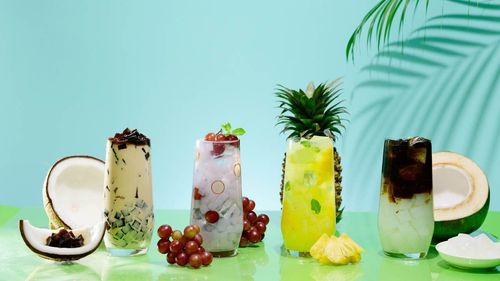
When serving, you can enjoy the jelly directly with ice or pair it with fresh fruits such as pineapple, dragon fruit, or longan to enhance the flavor. Coconut pandan jelly can also be used as a topping for milk tea or fruit drinks, adding both texture and a refreshing taste.

2. How to cook layered coconut pandan jelly
Layered coconut pandan jelly is a visually appealing dessert that combines the natural green color of pandan leaves with the clear white layer of coconut jelly, creating beautiful and delicious layers. With about 60 minutes for preparation and cooking, you can easily make this refreshing dessert at home.
2.1 Ingredient measurements
To prepare layered coconut pandan jelly for 3 servings, make sure you have the following ingredients in the quantities listed below.
2.2 How to cook coconut pandan jelly without the layers separating
2.2.1 Step 1: Mix and soak the jelly mixture
In a pot, add 25 g of agar powder and 350 g of granulated sugar, mixing them well together. Once the powder and sugar are evenly combined, add 1.1 liters of water, stir until dissolved, and let the mixture rest for about 30 minutes. Soaking the mixture before cooking allows the agar to fully hydrate, helping the jelly set smoothly and evenly without releasing water after it solidifies.
2.2.2 Step 2: Extract pandan juice
Wash the pandan leaves thoroughly, cut them into small pieces, and blend them with 100 ml of water until smooth. To achieve a brighter green color and reduce bitterness, you can soak the leaves in warm water for 5 - 10 minutes before blending. After blending, strain the mixture through a clean cloth or fine sieve to extract the pandan juice.
Tip: If you don’t have a blender, you can crush the pandan leaves with a mortar, mix them with water, and strain the liquid to achieve a similar result.
2.2.3 Step 3: Prepare the coconut milk mixture
Dissolve 50 g of coconut milk powder in 250 ml of water, then cook it over low heat, stirring continuously for about 5 - 10 minutes. Once the coconut milk begins to thicken slightly and releases a rich aroma, turn off the heat and transfer it to a separate bowl for the next step of pouring the layers into molds.
2.2.4 Step 4: Cook the agar mixture
Place the soaked agar mixture from Step 1 on the stove and cook over medium heat for about 10 minutes. Once the mixture begins to boil, continue cooking for another 3 minutes until it becomes clear and slightly thickened. At this point, divide the agar mixture into two portions:
Mix one portion (about 600 ml) with pandan juice and pandan flavoring.
Combine the remaining portion with 250 ml of coconut milk prepared earlier.
Note: Keep both pots on very low heat to prevent the jelly from setting before it is poured into the molds.
2.2.5 Step 5: Pour the layers into molds
First, pour a layer of pandan jelly into the mold and wait about 3 - 5 minutes until the surface slightly sets. You can gently touch it with your finger - if it feels slightly sticky but doesn’t break, it is ready for the next layer. Next, carefully pour the coconut milk layer on top and continue alternating the layers in this way until all the mixture is used.
2.2.6 Step 6: Finish and serve
Once all the layers are completed, let the jelly cool at room temperature for 15 - 20 minutes before placing it in the refrigerator for 1 - 2 hours. When the jelly has fully set, remove it from the mold and cut it into bite-sized pieces.
By following this layered coconut pandan jelly recipe, you will get beautifully alternating green and white layers. Each bite offers a pleasantly chewy texture, the refreshing aroma of pandan, and the rich creaminess of coconut milk.
These two how-to-cook coconut pandan jelly recipes are shared by GC Food, a company specializing in the production and supply of coconut jelly made from mature coconuts from Ben Tre, Vietnam.
3. Tips for choosing ingredients for coconut pandan jelly
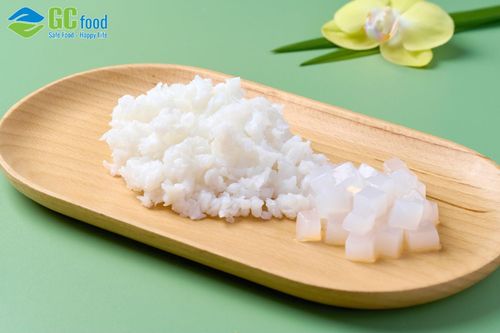
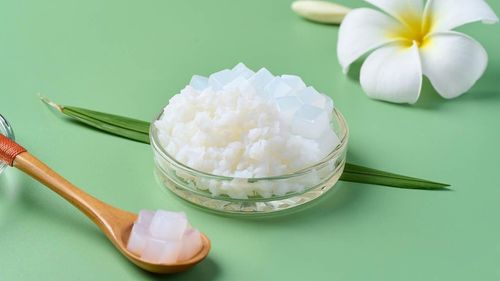
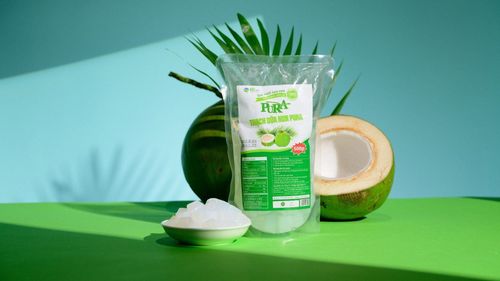
To make a delicious batch of coconut pandan jelly, learning how to cook coconut pandan jelly is only part of the process - you also need high-quality pressed coconut jelly (raw coconut jelly) as the main ingredient. When selecting coconut jelly, pay close attention to its sensory qualities. The jelly should have a naturally clear white color, without dullness or unusual spots.
In addition, good coconut jelly should have a light, natural coconut aroma with only a mild sour scent typical of the fermentation process, and it should never have any unpleasant or chemical odors. You can choose coconut jelly produced by G.C Food Joint Stock Company (GC Food). GC Food’s coconut jelly is fermented from mature coconuts sourced from Ben Tre, Vietnam, using the bacterium Acetobacter xylinum under strictly controlled production conditions.

Notably, GC Food applies Pasteurization technology to eliminate harmful bacteria such as E. coli and Salmonella. This advanced process also helps preserve the natural flavor of coconut jelly while maintaining the cellulose fiber structure of the product. As a result, the jelly retains its firm and pleasantly chewy texture without becoming soft or losing its shape during cooking.
For coconut jelly products intended for export, GC Food also utilizes an Aseptic UHT (ultra-high temperature) system. This modern technology extends the shelf life of coconut jelly without the need for chemical preservatives, while ensuring the product meets the strict standards required by demanding international markets.
4. Frequently asked questions about how to cook coconut pandan jelly
When learning how to cook coconut pandan jelly, you may have questions about storage, shelf life, or tips to make the final dessert look more appealing. To help you prepare this dish more easily, here are some commonly asked questions and quick answers.
4.1 How long can coconut pandan jelly be stored?
For coconut pandan jelly cooked with rock sugar, you can store and enjoy it for up to 10 days. However, layered pandan jelly with coconut milk should only be kept for about 2 - 3 days because the coconut milk can spoil more quickly, which may affect the flavor and freshness.
4.2 How should coconut pandan jelly be stored?
Place the jelly in small sealed bags or airtight containers and store it in the refrigerator. Sealing the container helps prevent the jelly surface from drying out and protects it from absorbing odors from other foods in the fridge.
4.3 Does coconut pandan jelly need to be steamed?
No. For coconut pandan jelly with rock sugar, simply boil the jelly with rock sugar syrup. For layered coconut pandan jelly, cook the agar mixture until it becomes smooth and slightly thick before pouring it into molds.
4.4 Can pandan leaves be replaced with other ingredients?
Pandan leaves are the key ingredient that gives this dessert its distinctive aroma and natural green color. However, if you want to experiment with different flavors and colors, you can replace them with other natural ingredients such as magenta plant leaf extract (purple), butterfly pea flowers (blue), or matcha powder.
4.5 What should you do if the layers of coconut pandan jelly separate?
Layer separation usually happens when the second layer is poured after the first layer has completely hardened. To avoid this, pour the next layer when the previous layer has just started to set and still feels slightly sticky when touched. If the surface has already dried too much, gently score a few lines on the surface with a toothpick before pouring the next layer to improve adhesion between the layers.
4.6 What should you do if the layered coconut pandan jelly doesn’t set?
Coconut pandan jelly may fail to set if the ratio of water to agar powder is incorrect or if the agar powder is not fully dissolved during cooking. To prevent this, make sure to stir the mixture continuously over medium heat for about 10 minutes, then continue cooking for another 3 minutes after it starts boiling so the mixture reaches the proper consistency before pouring it into molds.
4.7 Why does layered coconut pandan jelly become cloudy?
Cloudy jelly usually happens when foam is not removed during cooking or when the mixture is boiled over high heat, causing it to overflow. To keep the pandan layer clear and visually appealing, skim off foam regularly while cooking and strain the pandan juice thoroughly to remove any remaining leaf pulp.
4.8 Why is layered coconut pandan jelly too hard or too soft?
Jelly that turns out too firm is often caused by using too little water compared to the amount of agar powder or raw coconut jelly. On the other hand, the jelly may become too soft if you add too much water or use too little agar powder. To achieve the ideal texture, follow the correct ratio: 25 g of agar powder for about 1.1 - 1.5 liters of water, depending on how firm you prefer the jelly to be.
Hopefully, with these tips on how to cook coconut pandan jelly shared by GC Food, you can successfully prepare both coconut pandan jelly with rock sugar and layered pandan coconut jelly to treat your family and friends. These recipes allow you to recreate authentic Vietnamese coconut jelly at home with a refreshing flavor and pleasantly chewy texture. Don’t forget to visit the GC Food introduction page to choose high-quality raw coconut jelly for your recipes.
This article was compiled by Le Thi Anh Trinh - GC Food Communications Department, specializing in researching and sharing in-depth knowledge about ingredients and production processes for aloe vera and coconut jelly.