
 Ms. Lê Thị Ánh Trinh
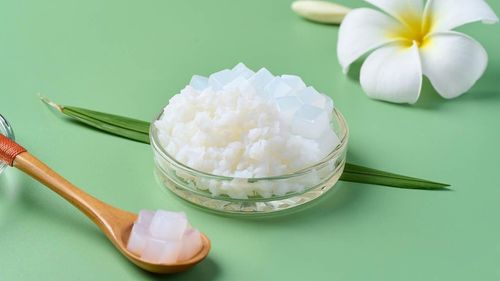
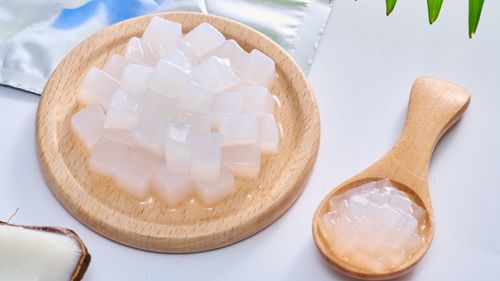
Nata de coco fruit jelly is a jelly made from fermented coconut water combined with the flavors of various fruits such as pineapple, strawberry, grape, or passion fruit. Thanks to its distinctive chewy and slightly crunchy texture and mild sweetness, it is often enjoyed on its own or used as a topping in beverages and desserts, enhancing both flavor and visual appeal.
1. What is nata de coco fruit jelly?
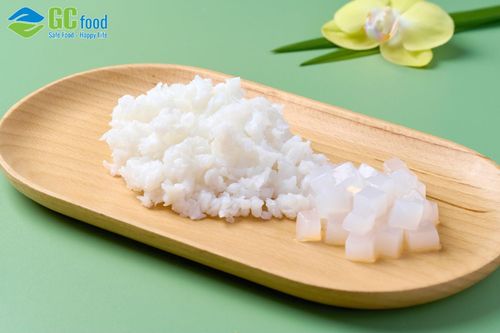
Nata de coco fruit jelly is a product made from nata de coco combined with sugar syrup and fruit flavors such as pineapple, strawberry, grape, orange, or passion fruit. Fruit jelly usually comes in various sizes (such as small cubes or diced pieces) and is packaged in bags, cans, or plastic jars for convenient storage and use.
Coconut jelly has a high water content and contains a good amount of dietary fiber, giving it a refreshing taste when enjoyed. Thanks to its crunchy texture, mild sweetness, and diverse fruit flavors, this product is commonly used in bubble tea, sweet soups, yogurt, soft drinks, and a variety of desserts.
2. What is nata de coco fruit jelly made from?
Nata de coco fruit jelly is produced through the fermentation of coconut water using the bacterium Acetobacter xylinum. During this process, the bacteria convert the sugars in coconut water into a jelly-like layer with a distinctive chewy and crunchy texture. After harvesting, the jelly layer is thoroughly washed, cut into small cubes, and then soaked in sugar syrup or fruit syrup to add flavor and color.
Finally, the product is pasteurized and packaged to ensure quality and food safety before being released to the market. As a result, fruit-flavored nata de coco retains its signature crunchy texture while offering refreshing fruit flavors, making it suitable for light snacks or as a dessert ingredient.

3. How is nata de coco fruit jelly different from regular nata de coco?
Both types of jelly are produced through the fermentation of coconut water, so they share common characteristics such as a crunchy texture and a naturally refreshing taste. However, fruit jelly is infused with fruit flavors, creating noticeable differences in taste and usage.
4. Popular types of nata de coco fruit jelly today
Today, nata de coco fruit jelly is produced in a wide range of flavors, sizes, and packaging options to meet different usage needs. This variety makes it easier for beverage shops, restaurants, and manufacturers to choose the most suitable type for their purposes.
Flavors: Coconut, pineapple, grape, strawberry, orange, passion fruit, and more, offering mild sweetness and the distinctive aroma of each fruit.
Jelly cube sizes: 03×03 mm, 08×08 mm, 10×10 mm, 12×12 mm, 15×15 mm, etc., suitable for various applications.
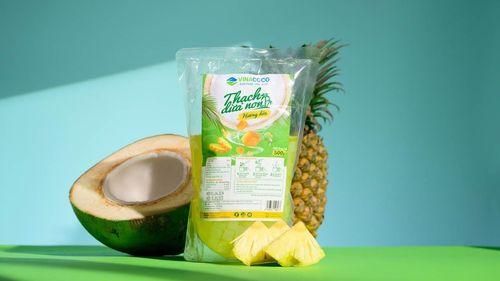
Packaging: PAPE bags, cans, or plastic jars, convenient for both retail sales and F&B businesses.
5. What dishes are nata de coco fruit jelly used in?
Thanks to its refreshing fruit flavors and distinctive crunchy texture, nata de coco fruit jelly can be used flexibly in a wide variety of foods and beverages. The combination of mild sweetness and fruity aroma makes it a popular ingredient in both drinks and desserts. This topping not only enhances the overall flavor of a dish but also adds an attractive visual element with its colorful appearance. In addition, the chewy and crunchy texture creates a more enjoyable eating experience, making beverages and desserts feel more interesting and satisfying.
5.1 Beverage topping
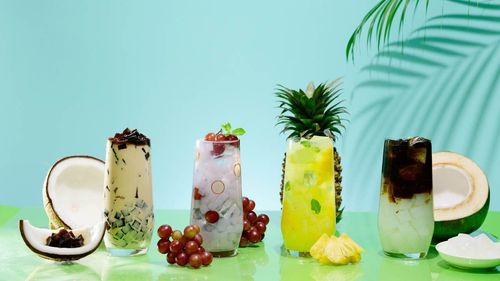
In the beverage industry, fruit jelly is widely used as a topping to enhance both the appearance and taste of drinks. Its bright colors and crunchy texture make beverages more visually appealing and enjoyable to consume. Fruit-flavored coconut jelly is often added to popular drinks such as bubble tea, fruit tea, juices, smoothies, and refreshing sodas. When mixed into these beverages, the jelly pieces provide a pleasant chewy bite that complements the liquid base, creating a more interesting drinking experience. As a result, this topping not only adds flavor but also helps make drinks more vibrant, fun, and satisfying for customers.
5.2 Desserts
Besides being used in beverages, fruit coconut jelly is also widely incorporated into a variety of desserts. Its mild sweetness, refreshing fruit flavors, and pleasantly crunchy texture make it a versatile ingredient that pairs well with many sweet treats. This type of jelly can easily be added to popular desserts such as sweet soups, yogurt, ice cream, and fruit salads, bringing an extra layer of texture and flavor to each dish.
When combined with these desserts, the small pieces of coconut jelly provide a chewy and crunchy bite that contrasts nicely with creamy or soft ingredients. In addition, the colorful appearance of fruit-flavored jelly can make desserts look more vibrant and visually appealing. As a result, it not only enhances the taste but also improves the overall presentation, making desserts more enjoyable and refreshing to eat.

5.3 Ready-to-eat/packaged products
In addition to being used as an ingredient in various dishes and beverages, fruit jelly is also packaged as a ready-to-eat product for direct consumption. Many manufacturers offer fruit-flavored coconut jelly in convenient packaging formats designed for quick and easy enjoyment. These products are commonly packed in bags, cans, or plastic jars, which help maintain freshness while making them easy to store and transport. Because of this convenience, fruit jelly can be enjoyed anytime as a light and refreshing snack. It is especially popular among consumers who want a sweet treat with a pleasantly crunchy texture and fruity flavor without requiring any preparation.
6. How to choose good fruit-flavored coconut jelly
To ensure good flavor and quality, consumers should select nata de coco fruit jelly based on several basic criteria. First, good-quality jelly usually has a clear, bright, and uniform color, without cloudiness or signs of discoloration. When observing the product, the coconut jelly pieces should appear slightly translucent, with a clean surface and no impurities.
You should also pay attention to the product’s origin and information when choosing fruit-flavored coconut jelly. It is best to prioritize products from clearly identified manufacturers, with transparent ingredient information and proper packaging. In addition, carefully check the packaging condition and expiration date to ensure the product is still fresh and has not leaked during storage or transportation.
7. GC Food fruit-flavored nata de coco: Commitment to quality and safety
In a market with many different suppliers, choosing products from a reputable manufacturer is an important factor in ensuring the quality of coconut jelly. To answer the question “Where to buy nata de coco,” G.C Food Joint Stock Company (GC Food) is one of the pioneering enterprises in the nata de coco processing industry in Vietnam, with a modern production system.
GC Food’s fruit-flavored coconut jelly is produced from coconut water sourced from Ben Tre Province, undergoing a natural fermentation process to create its characteristic crunchy texture. After shaping and processing, the product is pasteurized using Pasteur technology, which helps maintain its crisp texture, color, and stable flavor throughout storage.
In addition, GC Food applies an advanced Aseptic UHT system for its exported nata de coco products, sterilizing and filling them into sterile bags. As a result, the products achieve a longer shelf life without the need for preservatives while meeting export standards in many demanding international markets.

8. Frequently asked questions about fruit jelly
Besides its uses and product characteristics, many people still have questions when learning about fruit jelly, especially when it comes to how it is made, how it can be used, and how it differs from other toppings. Since fruit-flavored coconut jelly is widely used in beverages, desserts, and ready-to-eat snacks, understanding more about this ingredient can help consumers choose and use it more effectively. Below are some frequently asked questions that provide helpful information and a clearer overview of this popular and versatile topping.
8.1 Is nata de coco fruit jelly simply nata de coco soaked in syrup?
Basically, nata de coco fruit jelly can be understood as nata de coco soaked in fruit syrup to create distinctive colors and flavors such as pineapple, strawberry, grape, or passion fruit. Thanks to this syrup, each piece of coconut jelly has a mild sweetness and a light fruity aroma, making the product more appealing when eaten directly or used as a topping for drinks and desserts.
8.2 What toppings does fruit jelly pair well with?
Fruit-flavored coconut jelly is commonly used as a topping for many beverages such as bubble tea, fruit tea, smoothies, juices, or soda. In addition, it can also be combined with yogurt, sweet soups, ice cream, or fruit salad to add crunch and create a more enjoyable eating experience.
8.3 Can fruit jelly be eaten directly?
Yes, many types of nata de coco fruit jelly are pre-packaged and ready to eat as a refreshing snack. You simply open the package and enjoy it right away, or chill it beforehand for a cooler and more refreshing taste.
8.4 How long can fruit jelly be stored?
The shelf life of nata de coco fruit jelly usually depends on the production process and packaging method. Generally, the product can be stored for about 12 months if kept in a cool, dry place away from direct sunlight. After opening the package, it should be stored in the refrigerator and consumed within a short period to maintain the best quality.
8.5 How is fruit-flavored coconut jelly different from fresh fruit toppings?
Unlike fresh fruit, fruit-flavored coconut jelly has a distinctive crunchy texture and comes in pre-cut pieces, making it convenient for use in drinks or desserts. It also has a longer shelf life and is less likely to change during transportation. Fresh fruit, on the other hand, offers a more natural flavor but usually requires preparation and has a shorter storage time.
Fruit jelly not only offers a refreshing and easy-to-enjoy flavor but is also a versatile ingredient used in many foods and beverages. If you are looking for high-quality nata de coco fruit jelly with a variety of flavors and sizes, products from GC Food are worth considering. Visit our homepage to learn more about us and explore products that best suit your needs.
This article was compiled by the GC Food Team - Experts in natural ingredients.